Transmission Five: 5 Most Surprising Ways Artists Find InspirationWhere does inspiration come from? It's a question that has occupied artists, musicians, designers and thinkers for generations, yet the answer is rarely straightforward. Creative breakthroughs don't always happen in studios, rehearsal rooms or in front of a blank canvas. Sometimes they emerge from an overheard conversation, an unfamiliar piece of music, a childhood memory or an unexpected encounter with something entirely outside an artist's usual discipline.
Creativity is often associated with originality, but very few ideas exist in isolation. Every artist draws from a collection of experiences, influences and observations, consciously or otherwise. What distinguishes one creative voice from another is not necessarily the source of inspiration, but how that source is interpreted, transformed and given new meaning.
Through the conversations and creative exchanges taking place at this year's
Abbey Road: Studio Four at
SXSW London, we explored what happens when artists move beyond the boundaries of their own disciplines. How does a fashion designer interpret music through clothing? Can the architecture of a building influence choreography? What happens when musicians find inspiration in things that have nothing to do with music?
These questions reflect something that has long been central to Abbey Road's creative history. From artists experimenting with unfamiliar recording techniques to engineers developing new technologies in response to creative challenges, innovation has often emerged from a willingness to question established ways of working.
Through the varied perspectives and creative disciplines explored across
Abbey Road: Studio Four, this transmission examines how inspiration can emerge from unexpected places:
•
Sleaford Mods' Jason Williamson and his approach to finding meaning in the noise.• From fashion and sound, through our collaboration with
Charles Jeffrey LOVERBOY and the creation of The Big Nessie.• From everyday observations, through the creative insights of artists including
Olivia Dean, Maverick Sabre and Gracey as well as Conor Albert, Kamille and James Smith (Yard Act), shared during
Abbey Road Amplify.
• From movement and physical space, through dance collaborations with
Joseph Toonga, Jordan Rakei, Daniel Pemberton and PCK Dance.• And from the tools themselves, through
Abbey Road and Chandler Limited's development of the REDD Mixing System.
Finding Meaning in the Noise
If inspiration can come from the ordinary, can it also come from the uncomfortable?
For Jason Williamson, one half of Nottingham punk duo Sleaford Mods, the answer is closely connected to the relationship between lived experience, observation and artistic expression. Known for his distinctive vocal delivery, confrontational lyrics and physical stage presence, Williamson draws on the language, frustrations and contradictions of everyday life.
During a conversation at Abbey Road: Studio Four, he described finding lyrical inspiration in the mundane details of his surroundings, contrasting the familiar realities of everyday British life with more romanticised images of musical success. Rather than looking towards the glamour of palm trees and Sunset Strip, Williamson is interested in what he describes as the "fish and chips of every day". His lyrics can emerge from fragments of conversations, shop signs or seemingly disconnected images. These observations are collected and assembled, sometimes because of how the words sound together rather than because they immediately form a coherent narrative. The process reflects a willingness to find meaning in the ordinary, but also to allow that meaning to emerge through experimentation rather than forcing it into a predetermined structure.
Williamson's approach to performance takes this idea further. Discussing the origins of his distinctive stage movements, he explained that inspiration can come from almost anything that has affected him, including films, pornography and other visual experiences. Some of these influences are uncomfortable or connected to difficult personal experiences. Rather than simply reproducing them, Williamson describes taking elements of those experiences and transforming them into something he can control through performance. Reflecting on the negative impact pornography had on him, he spoke about incorporating aspects of its imagery and physicality into his movements as a way of reclaiming something that had affected him. He described the process as "claiming it for myself". This introduces a different dimension to the question of inspiration. Creative influences aren't always positive, beautiful or even things an artist consciously admires. Sometimes they are experiences that have unsettled them, challenged their understanding of themselves or left a lasting impression. The act of transforming those influences into art can give them an entirely different meaning.
Williamson offered a particularly unexpected example when discussing the creation of his character Baking Daddy. During lockdown, a domestic moment involving his wife filming him making banana bread developed into an improvised performance. Drawing on exaggerated vocal mannerisms associated with pornography, Williamson began experimenting with a character that eventually took on a life of its own. What began as an ordinary interaction at home became an unexpected form of creative expression. As Williamson explained: "You're presenting an energy or a mindset in a completely different way. That's where creativity becomes interesting."
His musical influences are similarly unpredictable. Williamson described rediscovering the pleasure of listening to music outside his usual tastes, exploring everything from Iron Maiden and obscure metal to the soundtrack of the 1984 film Footloose. Even music he doesn't necessarily consider good can offer something creatively valuable. A particular sound, arrangement or approach to songwriting might spark an idea independently of his opinion of the song as a whole. The 1980s, he explained, have become a significant source of inspiration for his recent writing.
Perhaps the clearest expression of his creative philosophy comes when discussing the physical influences behind his performances. Drawing connections between the movements of comedians, musicians and other performers, Williamson concludes: "Anything can influence me: belly dancing, anything." His perspective challenges the assumption that inspiration must come from something an artist identifies with or admires. Sometimes the most interesting creative material comes from the things we don't fully understand, the experiences we'd rather forget or the cultural influences we might ordinarily dismiss.
Inspiration is not necessarily about celebrating the source. It can be about transforming it into something that expresses an entirely different meaning.
Finding Inspiration in the Everyday
Inspiration is often romanticised as something that arrives in extraordinary circumstances. A moment of revelation, an unfamiliar destination or an experience so significant that it demands to be turned into art. Yet some of the most interesting creative ideas begin with something far less remarkable.
Through
Abbey Road Amplify, our programme supporting the next generation of artists, producers and music makers, we've welcomed musicians and industry professionals into the studios to share their experiences, creative processes and the lessons they've learned along the way.
Across these conversations, one recurring idea has emerged: creativity often depends on the ability to notice things that others might overlook.
During an Amplify panel, musician and producer Conor Albert reflected on the importance of maintaining a childlike sense of curiosity. He described how a child might become completely fascinated by something as insignificant as a small pebble on the ground, examining it with a level of wonder that adults often lose as they grow older. For Conor, retaining that openness to the world is an important part of making music.
It's a simple observation, but one that raises an interesting question about the creative process. As artists become more experienced, develop technical skills and establish their own ways of working, do they also become more selective about what they consider worthy of attention? A child doesn't necessarily distinguish between what is important and what is insignificant. Everything has the potential to be interesting. For an artist, that same curiosity can create opportunities to discover something unexpected.
This idea of looking beyond the obvious also emerged during an Amplify songwriting discussion featuring Olivia Dean, Maverick Sabre and Gracey.
When describing how he approaches creative blocks, Maverick explained that rather than continuing to listen to a piece of music repeatedly, he sometimes turns to visual art. He might watch a favourite film scene or music video on a loop with the sound turned off, or spend time looking at a painting or image. Instead of searching for musical inspiration within music itself, he allows the atmosphere and emotion of an image to influence the direction of a composition. A film scene can suggest a mood, a painting can evoke a feeling, and those responses can become a starting point for melody, harmony or rhythm. It's an approach that recognises how closely connected our senses and creative instincts can be. The emotional impact of a visual image doesn't necessarily need to be translated literally into sound. It can simply change how a musician hears what they're working on.
The discussion also explored the importance of allowing the mind to wander. Gracey offered the wonderfully specific example of becoming distracted by a conversation about the wingspan of an eagle. Rather than viewing that diversion as wasted time, she suggested that allowing the brain to play, explore and move away from the task at hand can be an important part of the creative process. Not every distraction needs to produce an immediate idea. Sometimes the value comes from interrupting a familiar pattern of thinking. The pressure to remain productive can encourage artists to treat every moment of the creative process as something that should produce a measurable result. But experimentation, conversation and even seemingly irrelevant distractions can help create the conditions in which new ideas emerge.
For Olivia Dean, collaboration offers another way of moving beyond established habits. Reflecting on her experience writing with songwriter and producer Eg White, Olivia described how his openness to unusual ideas helped her feel less inhibited about sharing thoughts or lyrics she might otherwise have dismissed. The willingness to voice an idea before deciding whether it is good enough creates room for unexpected creative possibilities. Not every suggestion will work, but the process of exploring them can lead somewhere neither collaborator anticipated.
The common thread across these perspectives is the importance of remaining receptive. Whether it's a pebble on the ground, a silent film, an unrelated conversation or an idea that initially sounds strange, inspiration often begins with a willingness to take something seriously before knowing whether it will be useful.
Creativity doesn't always require a new environment or an extraordinary experience. Sometimes it requires a different way of paying attention to the world already around us.
The Art of Seeing Things Differently
Fashion and music have always shared a close relationship, with artists using clothing to communicate identity, challenge convention and create visual worlds around their music. But what happens when that relationship is reversed? When fashion doesn't simply take inspiration from music, but becomes a source of music itself?
This was the starting point for Abbey Road's collaboration with British fashion designer Charles Jeffrey LOVERBOY, whose Spring/Summer 2026 collection, Prepared Piano, explored the relationship between sound, clothing and creative experimentation.
Rather than approaching Abbey Road solely as a source of musical heritage, Jeffrey looked to the people, processes and environments that have shaped its history. Drawing inspiration from archival photographs and footage, the collection reimagined the visual identities of the musicians, engineers and executives who inhabited the studios across different eras. From the white laboratory coats of recording engineers to the exaggerated tailoring of musicians and the contemporary uniform of bedroom producers, these familiar archetypes were transformed into something new.
The collection's name itself references experimental composer John Cage, whose prepared piano technique involved placing objects such as bolts, rubber and other materials inside a piano to alter its sound. By disrupting the instrument's conventional mechanics, Cage transformed something familiar into an entirely new source of musical possibilities.
Jeffrey applied a similar philosophy to clothing, distorting familiar garments through unconventional proportions, unexpected details and exaggerated forms. Just as Cage questioned what a piano could sound like, Jeffrey questioned what traditional clothing could become. At the centre of the collaboration were two questions: What does fashion sound like? And how might sound be worn?
Jeffrey began sketching while listening to music recorded at Abbey Road, allowing melodies to influence colour, shape and form. But the creative exchange extended beyond translating music into clothing. Working with Abbey Road's Audio Products team, led by Mirek Stiles, the collaboration began exploring the sounds hidden within the processes of fashion design itself. Sewing machines, scissors, fabrics and the everyday activity of the LOVERBOY workshop at Somerset House became potential sources of musical material.
Sounds that would ordinarily be considered incidental to the creative process were recorded, manipulated and transformed into something that could be played. The resulting instrument, The Big Nessie, became Abbey Road's first fully in-house developed sampled instrument.
Created using field recordings from the LOVERBOY workshop and recording sessions in Studio Two, it brings together raw textures, unusual percussion and experimental sounds in a playable digital instrument available to music makers of all levels.
Reflecting on the collaboration, Mirek explained: "Working with Charles Jeffrey was a truly inspiring experience that took both LOVERBOY and Abbey Road out of their comfort zones to make a fun and quirky sampled instrument for the creative community across the globe."
The project demonstrates how creative possibilities can emerge when artists challenge the assumed purpose of an object or process. A sewing machine is designed to construct clothing but it also produces rhythm. Scissors are tools for cutting fabric but their movements create percussion. The sounds of a working environment, normally ignored or filtered out, can become the foundation of a musical composition.
The creative exchange also worked in both directions. Music inspired the garments, while the processes of creating those garments generated new musical material. What began as a fashion collection ultimately became an opportunity for musicians and producers to explore sounds they might never have encountered through conventional instruments.
The lesson is not simply that different disciplines can inspire one another, but that changing how we perceive familiar objects can reveal creative possibilities that were there all along.
When Sound Becomes Movement
Music and dance have always been closely connected, but the relationship between the two is not simply one of accompaniment. A piece of music can suggest movement, while movement can reveal rhythms, textures and emotional qualities within a composition that might otherwise remain unnoticed.
Across a series of performances and creative collaborations at Abbey Road, we've explored how choreographers, composers and dancers interpret one another's work, and how ideas can move between different forms of artistic expression.
One example is Synergy in Motion, a collaboration bringing together choreographer Joseph Toonga, musician and producer Jordan Rakei, and composer Daniel Pemberton for a performance celebrating the reopening of Studio One.
The project brought together creative disciplines that do not always share the same processes or methods of expression.
For Pemberton, the opportunity to see music interpreted through contemporary dance offered a different perspective on composition. Movement could draw attention to elements of a score that might not have been immediately apparent when it was written.
Rakei similarly explored the challenge of translating music created for film into something that could work within a dance performance, considering how unusual rhythmic structures and changes in atmosphere might inform movement. Rather than treating the music as a fixed starting point, the collaboration allowed it to be interpreted and understood through another creative language.
For Toonga, inspiration also emerged from the physical environment of Abbey Road itself. During the development of the performance, costume designer Victoria researched the history of the building, incorporating references to sound waves and the studio floor into the costume design. These visual ideas subsequently influenced how Toonga approached the choreography. He began considering how concepts associated with sound could be translated into physical movement, asking: "How do I use slow motion? How do I use animation?"
The process demonstrates how an idea can develop as it moves between different creative disciplines. Research into the history of a building informs a costume. The costume influences how a choreographer interprets the music. That interpretation becomes movement, giving the original inspiration a new form and meaning.
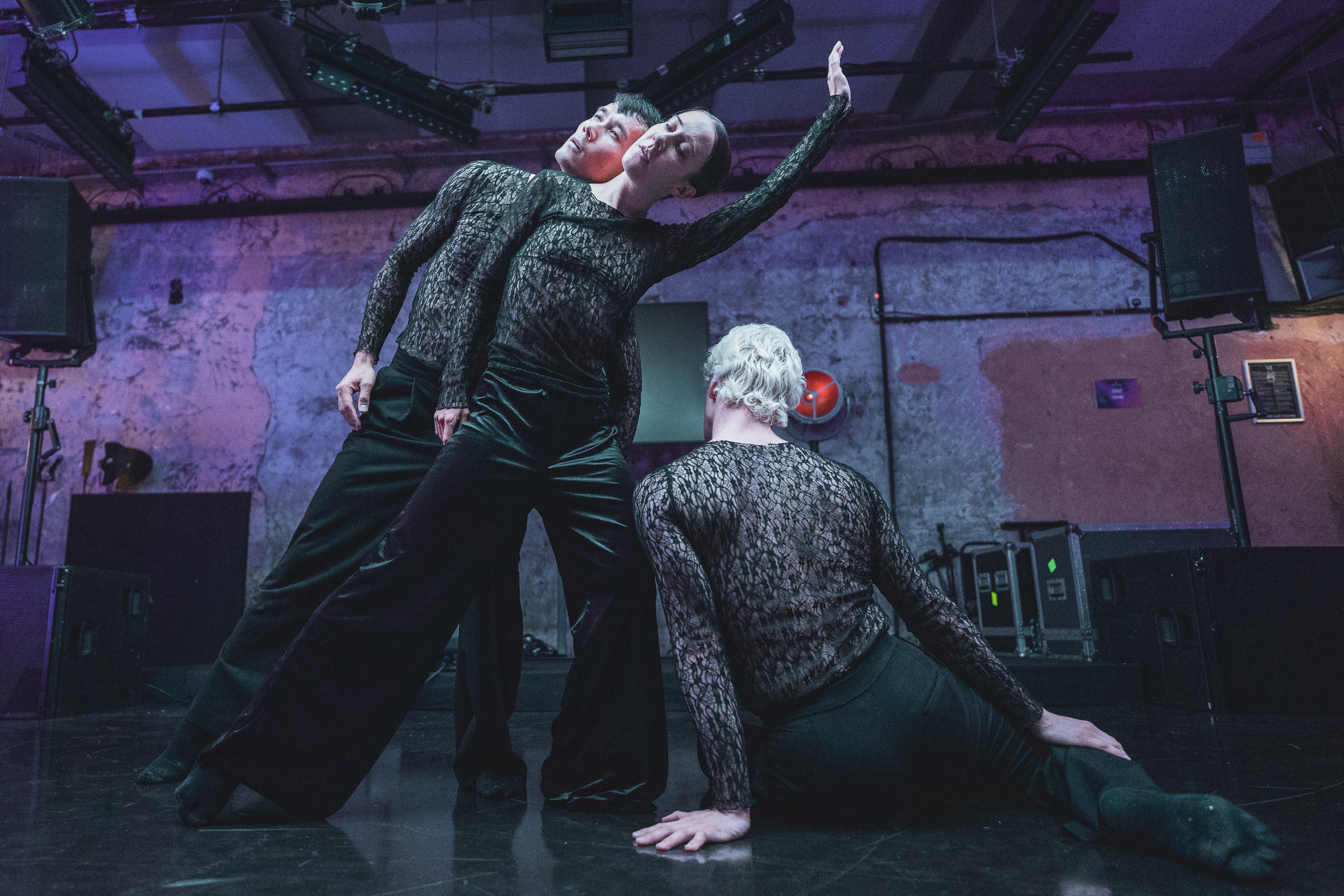
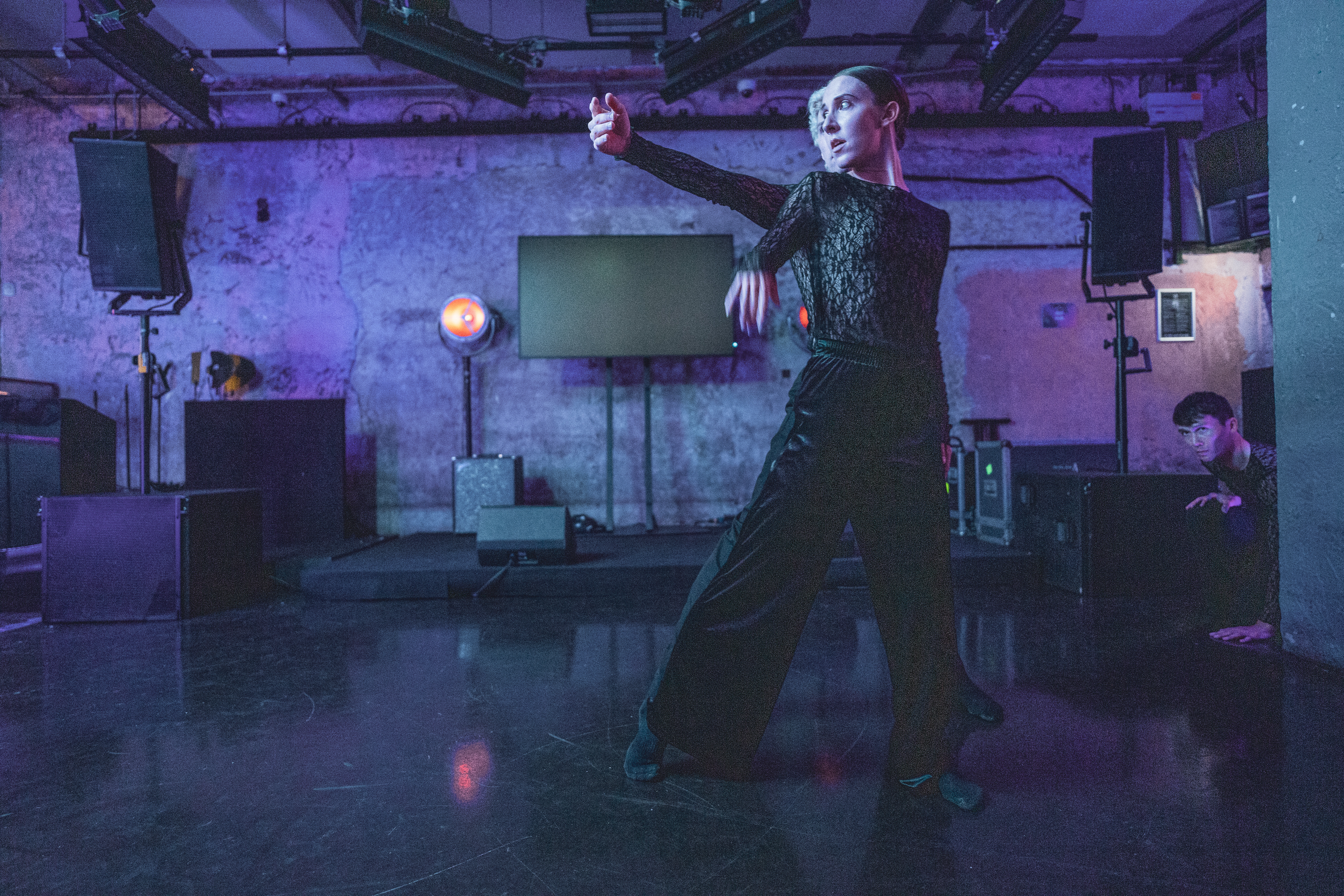
A similar exchange between sound and movement was central to VESSEL, a performance created for this year's Abbey Road: Studio Four by PCK Dance, founded by choreographers James Pett and Travis Clausen-Knight, with original music by composer Sean Pett.
Exploring human instincts, self-perception and connection, VESSEL brought together contemporary dance and live electronic music to examine the relationship between physical and emotional experience.
For Sean Pett, the creative process often begins without a clearly defined destination. Rather than entering the studio with a fixed musical structure in mind, he described assembling instruments and experimenting to see what emerges. He deliberately combines vintage synthesisers with more contemporary sounds, creating what he calls a "creative collision" between different technologies and sonic approaches.
One particularly unusual source of inspiration came from the Lyra-8 synthesiser. Sean described the instrument as behaving almost like a "breathing kind of organism", with sounds that respond to physical touch and change in unpredictable ways. This behaviour suggested a connection with the movement and breathing of dancers, allowing the characteristics of an electronic instrument to inform his thinking about the human body. The instrument was no longer simply a tool for producing sound. Its behaviour became part of the creative inspiration behind the composition.
Sean also describes himself as a visual composer, developing ideas through conversations with choreographers and building a shared visual language before translating those concepts into music. Rather than composing a complete piece from beginning to end, he often creates small fragments of sound that are gradually assembled into something larger.
He compares the process to a jigsaw puzzle, with one important difference: the pieces themselves have to be created before they can be put together. This willingness to work without knowing exactly where an idea will lead reflects the experimental nature of the collaboration. The music influences the choreography, the choreography changes how the music is understood, and both respond to the physical environment in which they are performed.
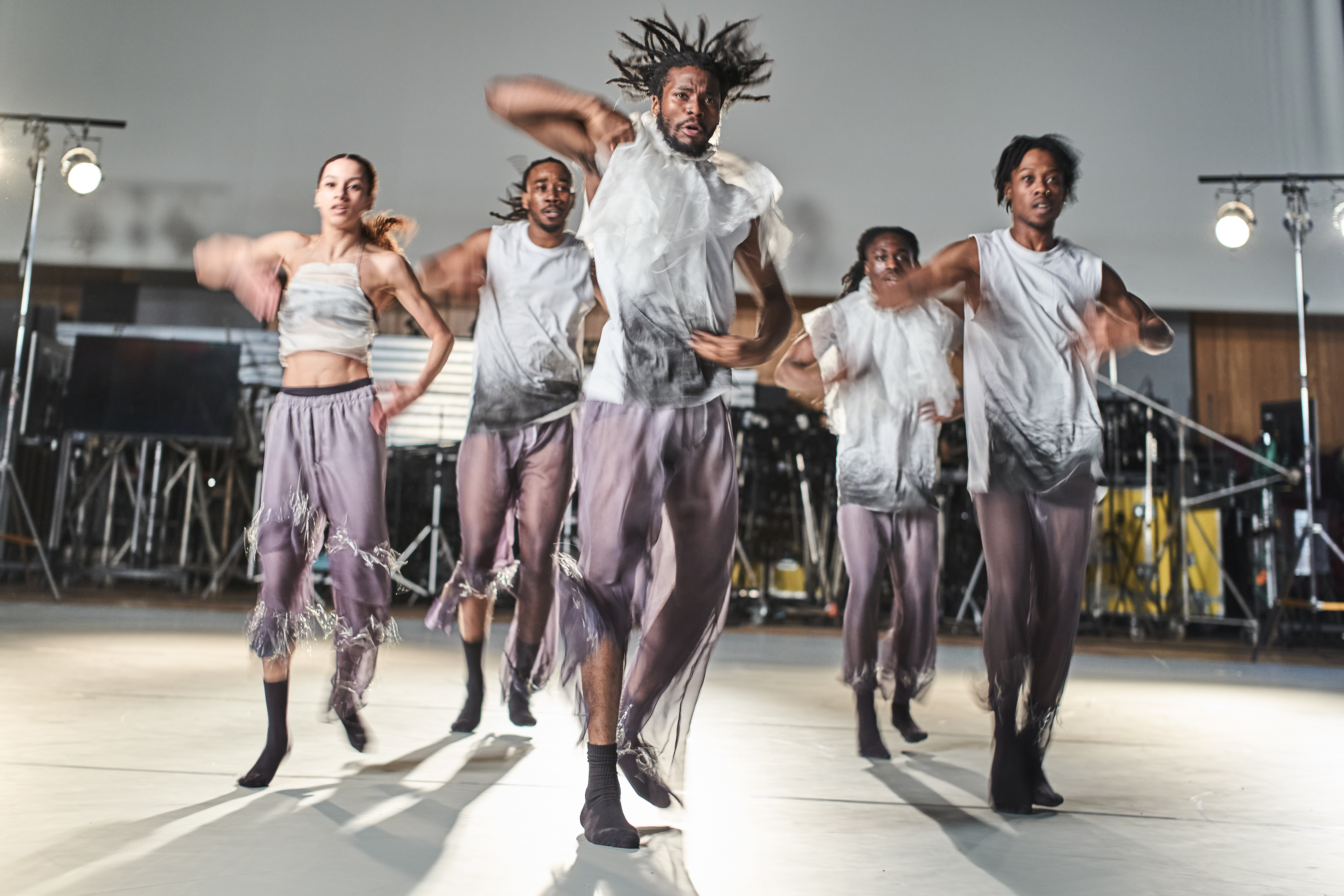
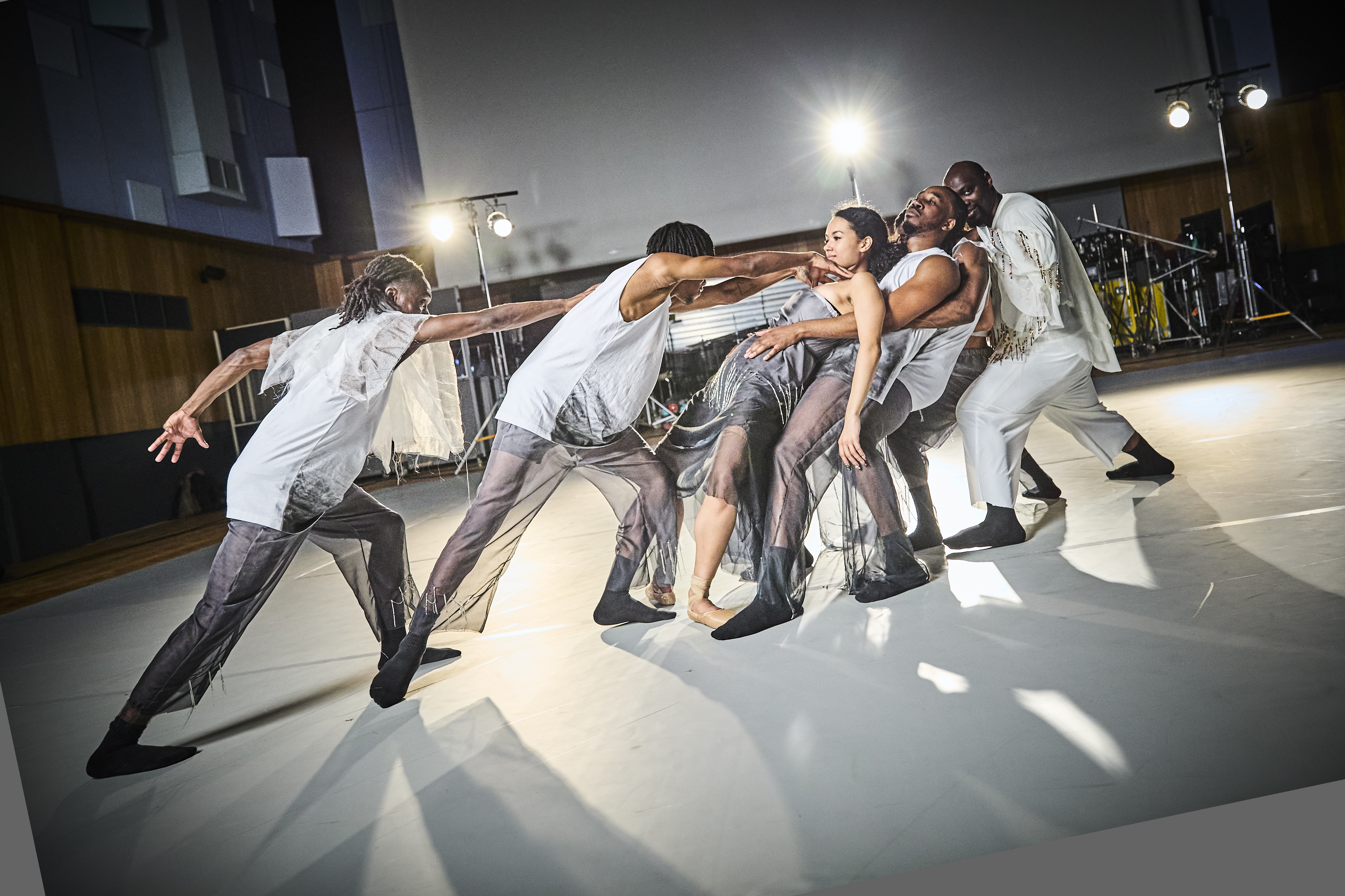
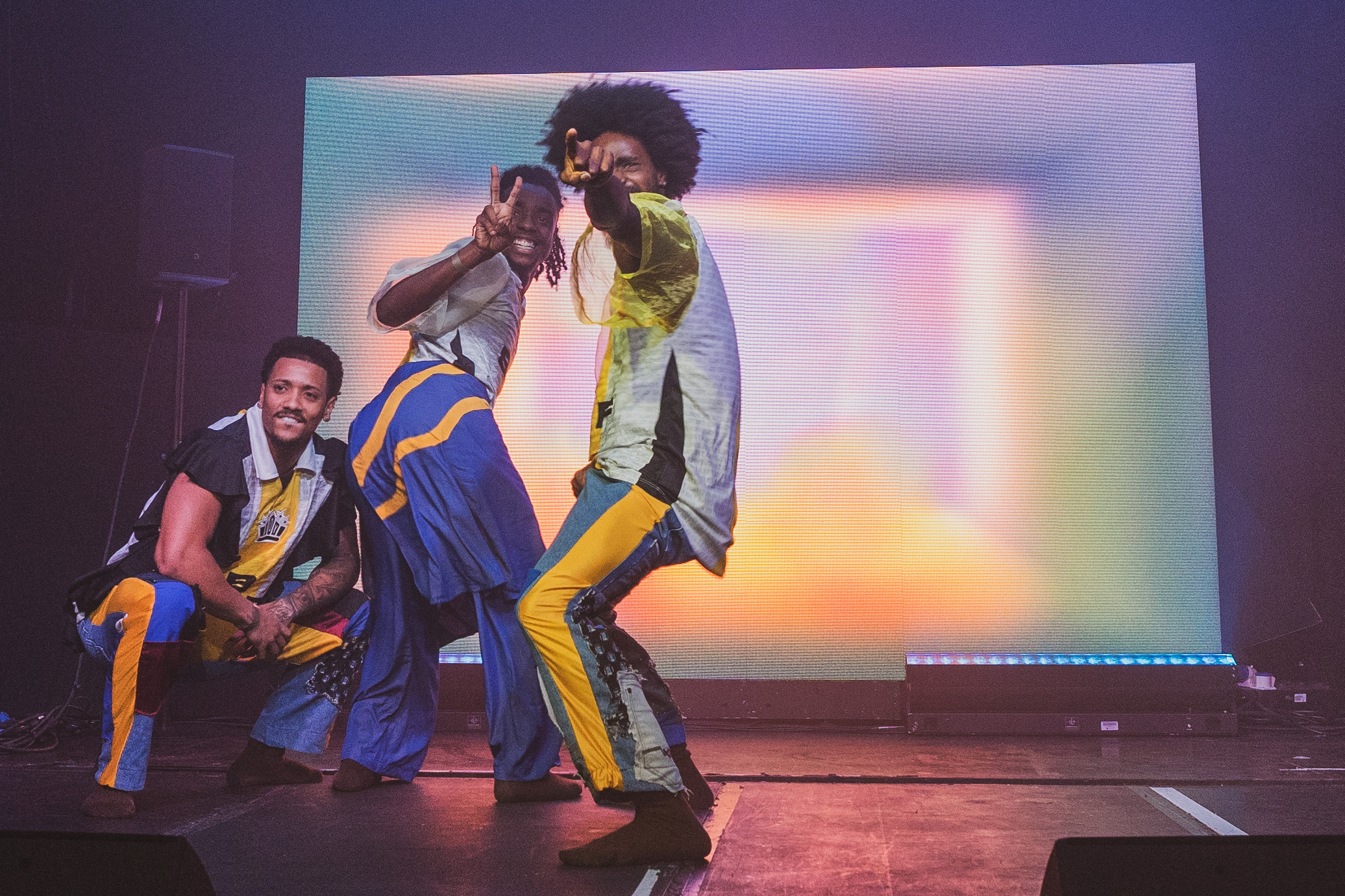
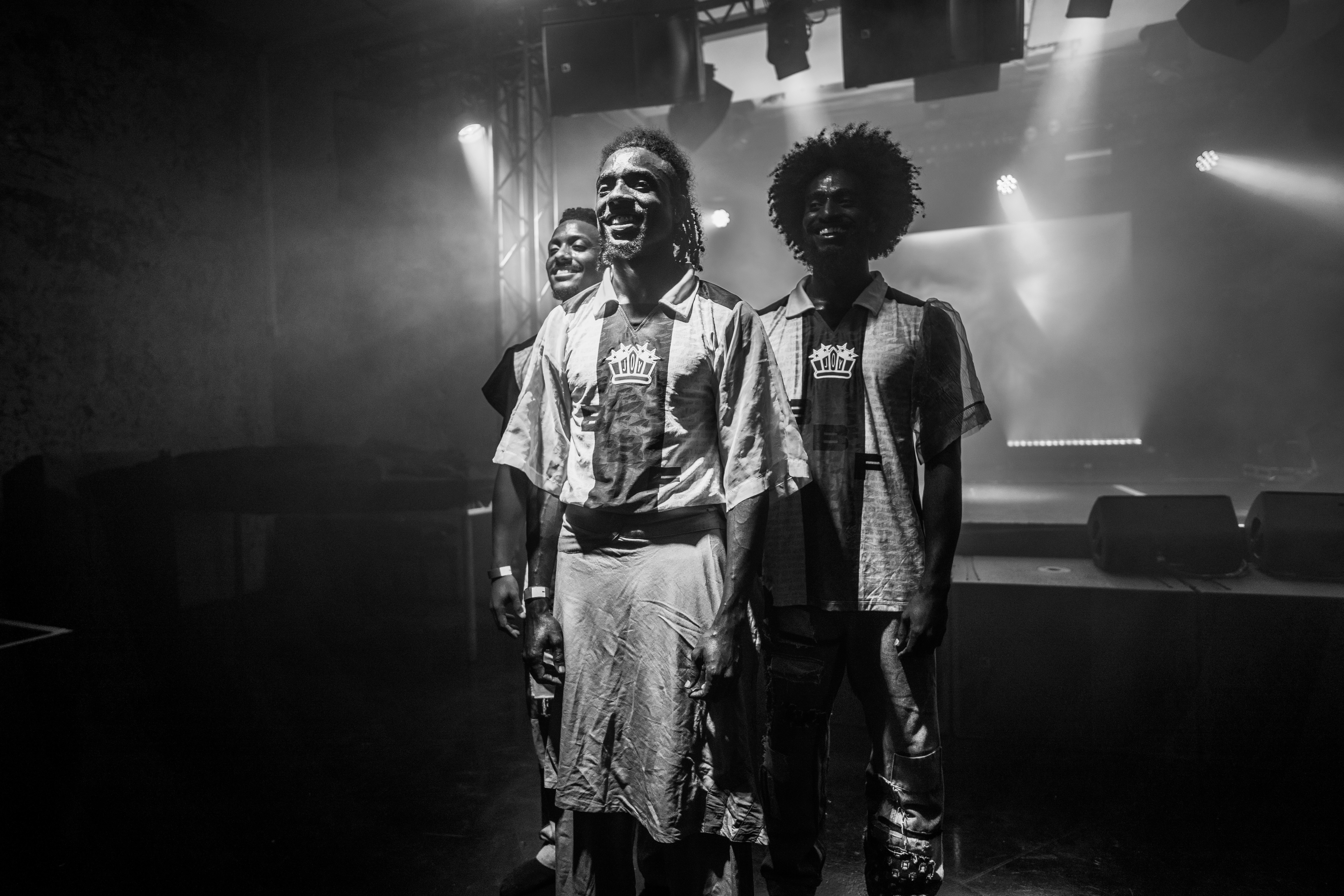
The relationship between movement and lived experience also informed Joseph Toonga's Joy As Resistance which was also performed at this year's Abbey Road: Studio Four, bringing together the choreographer and a group of artists from Rio to explore joy, resilience and collective expression through hip hop movement.
The performance examined how the body carries memory and experience, and how movement can become a means of expressing emotions and histories that are not always easily communicated through words.
Joseph Toonga's powerful work brought together a cast of dancers from Rio de Janeiro fusing hip-hop, contemporary dance and Passinho influences, exploring how joy can exist alongside struggle using movement to express resilience, connection and community rather than presenting joy as a simple or uncomplicated emotion.
For Toonga, the inspiration didn't begin with choreography. It began with a question about what it means to support one another. He explains, "Joy can be an act of resistance because sometimes it is simply about choosing to hold space for each other. For me, brotherhood is about care - being able to laugh together, support one another, be vulnerable, and sometimes just exist together without having to explain what we are carrying. There is power in knowing you don’t have to carry everything alone."
Rather than treating joy as a spectacle or a performance, Toonga explores it as something quieter: the trust built through friendship, the comfort of shared experience and the strength that comes from collective care. Those relationships become the creative starting point, shaping not only the ideas behind the work but the energy and physicality of the performance itself. It's a reminder that inspiration doesn't always come from an object, a place or a piece of music. Sometimes it comes from people, from the conversations we have, the communities we build and the spaces where we feel able to be ourselves.
The body responds instinctively to rhythm, sound and space. Movement can communicate something before it has been consciously articulated, while physical environments can influence how a performance develops. Across these projects, dance offers a reminder that creativity is not exclusively an intellectual process. When artists allow ideas to move between sound, movement, design and physical space, inspiration becomes a shared process of interpretation rather than something belonging to a single discipline.
Together, Synergy in Motion, VESSEL and Joy As Resistance reveal different ways creativity can travel. Ideas move between architecture and choreography, between electronic instruments and the human body, and between lived experience and movement. In each case, inspiration isn't something fixed or isolated; it grows through collaboration, connection and the willingness to see one artform, or one another, through a different lens.
When the Tools Become the Inspiration
Creative technology is often discussed in terms of what it allows artists to achieve. New equipment promises greater flexibility, more precise control and an expanding range of possibilities. But technology can also influence creativity in less obvious ways. The physical experience of working with an instrument, the limitations of a particular recording process or the distinctive character of a piece of equipment can shape the decisions an artist makes.
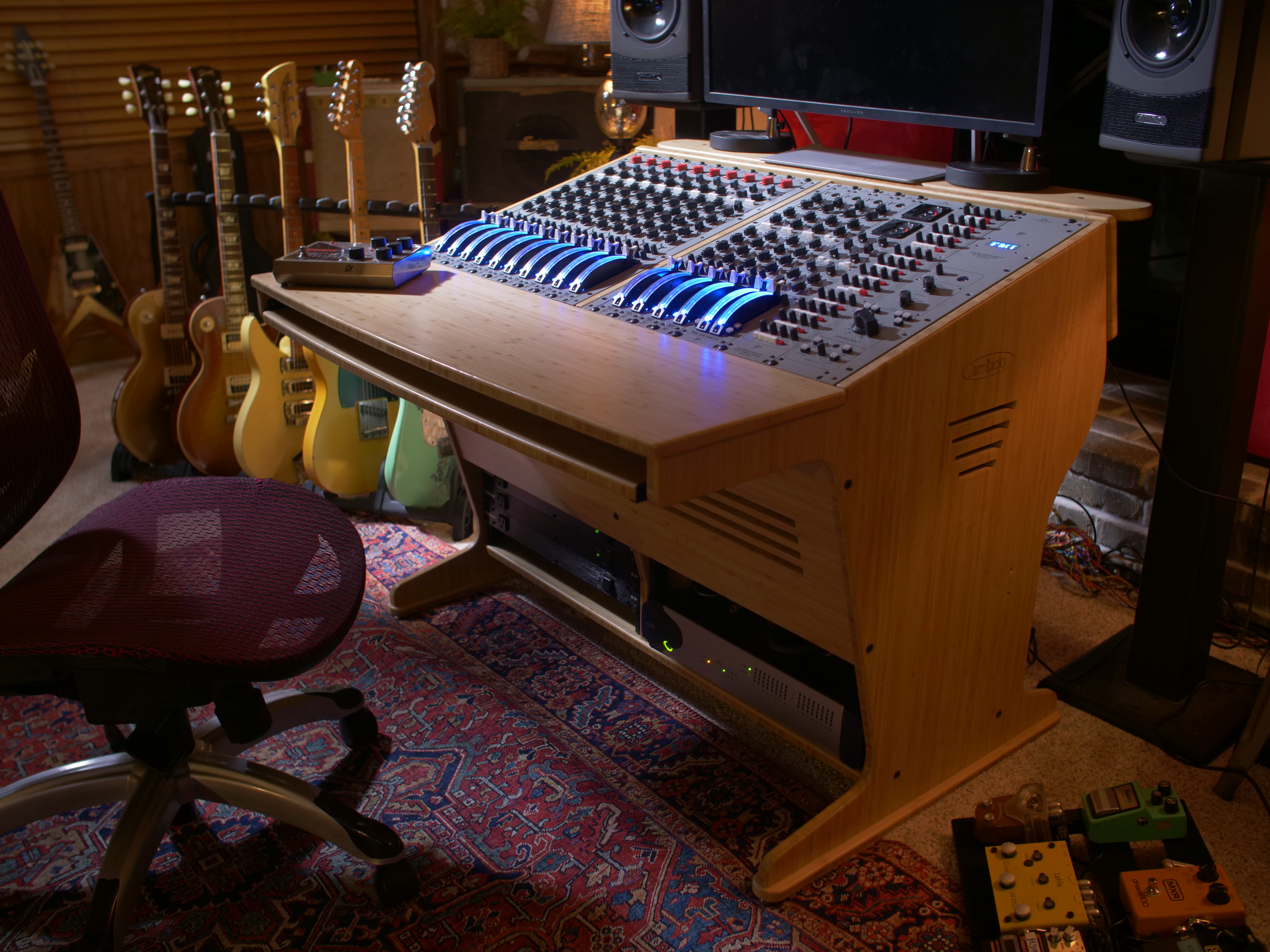
At Abbey Road, the relationship between technology and creativity has been central to the studios' history. From the development of early recording equipment by EMI's Record Engineering Development Department (REDD) to the continued use of historic analogue technology, the tools used to capture music have often become part of its creative identity. This relationship is at the heart of the REDD Mixing System, developed by Abbey Road in collaboration with Chandler Limited.
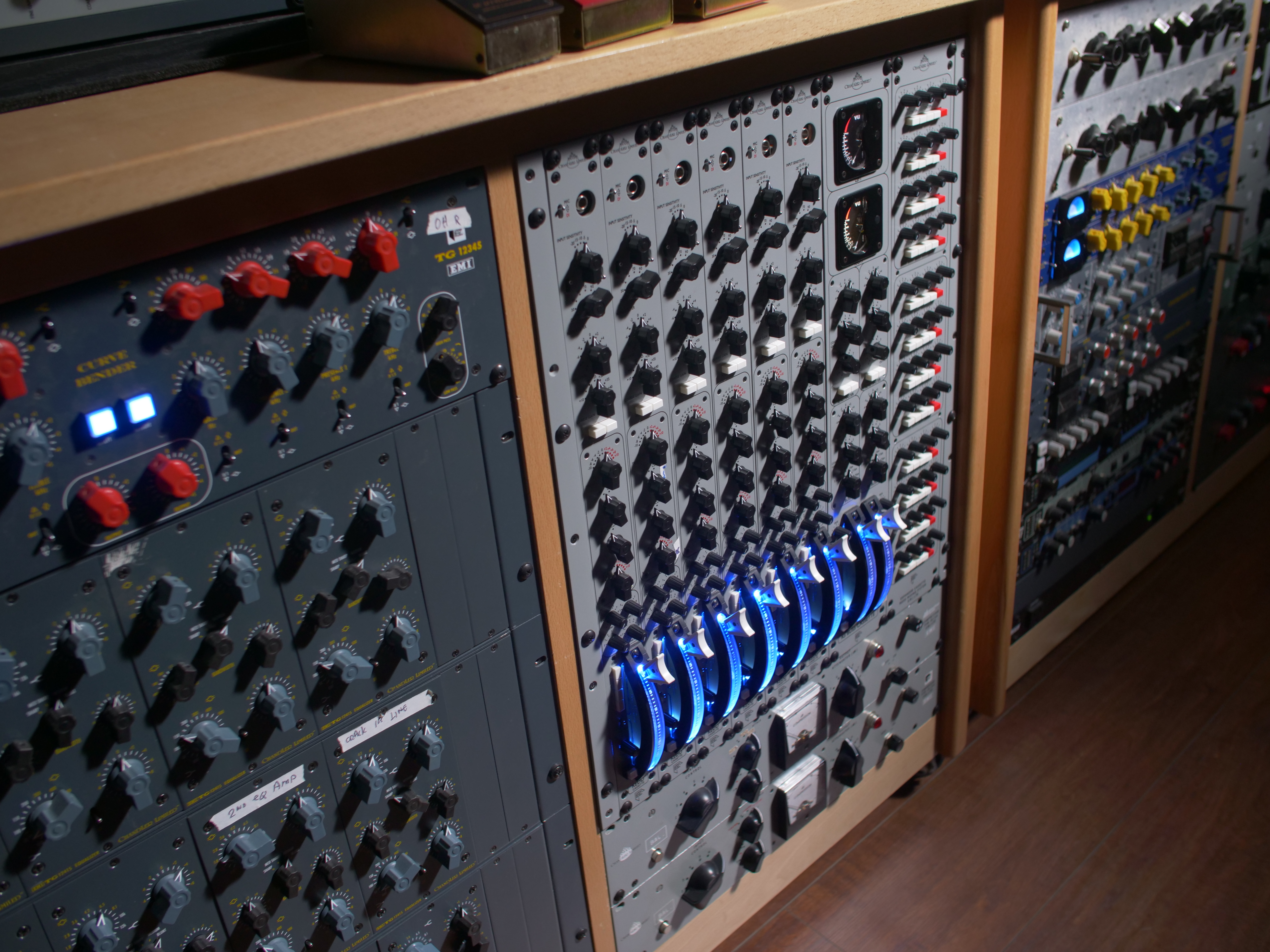
Marking the first EMI recording console released in over 50 years, the system brings together elements of Abbey Road's historic REDD, TG and RS recording technologies in a fully modular format designed for contemporary music production.
While modern recording technology offers increasingly sophisticated digital workflows, the REDD Mixing System draws inspiration from an earlier approach to music production, where engineers and producers interacted directly with the physical components shaping the sound.
Its design incorporates elements inspired by historic EMI equipment, including recreated vintage-style faders, alongside modern flexibility that allows producers to configure their own recording and mixing environments.
The project was developed over six years through collaboration between Chandler Limited founder Wade Goeke, Abbey Road Head of Audio Products Mirek Stiles and the wider Abbey Road team.
In a conversation about the system, the importance of the physical experience was captured in a simple observation: "It's about the feeling." The point extends beyond nostalgia for analogue recording equipment.
Different tools encourage different ways of working. The tactile experience of moving a fader, adjusting a physical control or experimenting with the character of an analogue circuit can influence how a producer listens and responds to music. A tool is not simply a neutral means of achieving a predetermined result. Its design, limitations and sonic characteristics can become part of the creative process itself.
For Mirek Stiles, the inspiration behind the REDD Mixing System is closely connected to his early experiences at Abbey Road. Reflecting on encountering the original REDD and TG desks at the age of 18, he described watching producers including Mike Hedges, Jon Brion and Peter Cobbin use the equipment to shape recordings and mixes in a distinctly musical way. Those experiences helped establish an appreciation for the creative possibilities of equipment that has since become increasingly rare. The new system aims to make that approach available to contemporary artists, producers and engineers while adapting it to the requirements of modern recording environments.
The relationship between historical technology and contemporary creativity raises a broader question. Does having access to more tools necessarily lead to more interesting ideas? Modern production environments can offer almost unlimited options but creative decisions are still shaped by the character of the equipment, the instincts of the person using it and the limitations they choose to work within. Sometimes those limitations can be productive. A distinctive sound or unfamiliar workflow can encourage an artist to approach a composition differently, while the physical interaction with equipment can lead to discoveries that were never part of the original plan.
This is also what connects the REDD Mixing System to the experimental approach behind Charles Jeffrey's Prepared Piano and Sean Pett's work on VESSEL. In each case, the characteristics of a tool or instrument become a source of creative possibility.
Technology doesn't simply enable creativity. In the hands of an artist willing to experiment, the tool itself can become part of the inspiration.
Looking Beyond the Obvious
What connects these stories isn't the source of inspiration itself, but the willingness to look at something familiar and ask a different question.
A sewing machine doesn't become a musical instrument until someone decides to listen to it differently. A building doesn't become choreography until someone interprets its history through movement. An uncomfortable experience doesn't become art until an artist reshapes it into something meaningful.
Creativity rarely begins with the extraordinary. More often, it begins with curiosity, with noticing what's already there, making unexpected connections and giving yourself permission to explore them.